
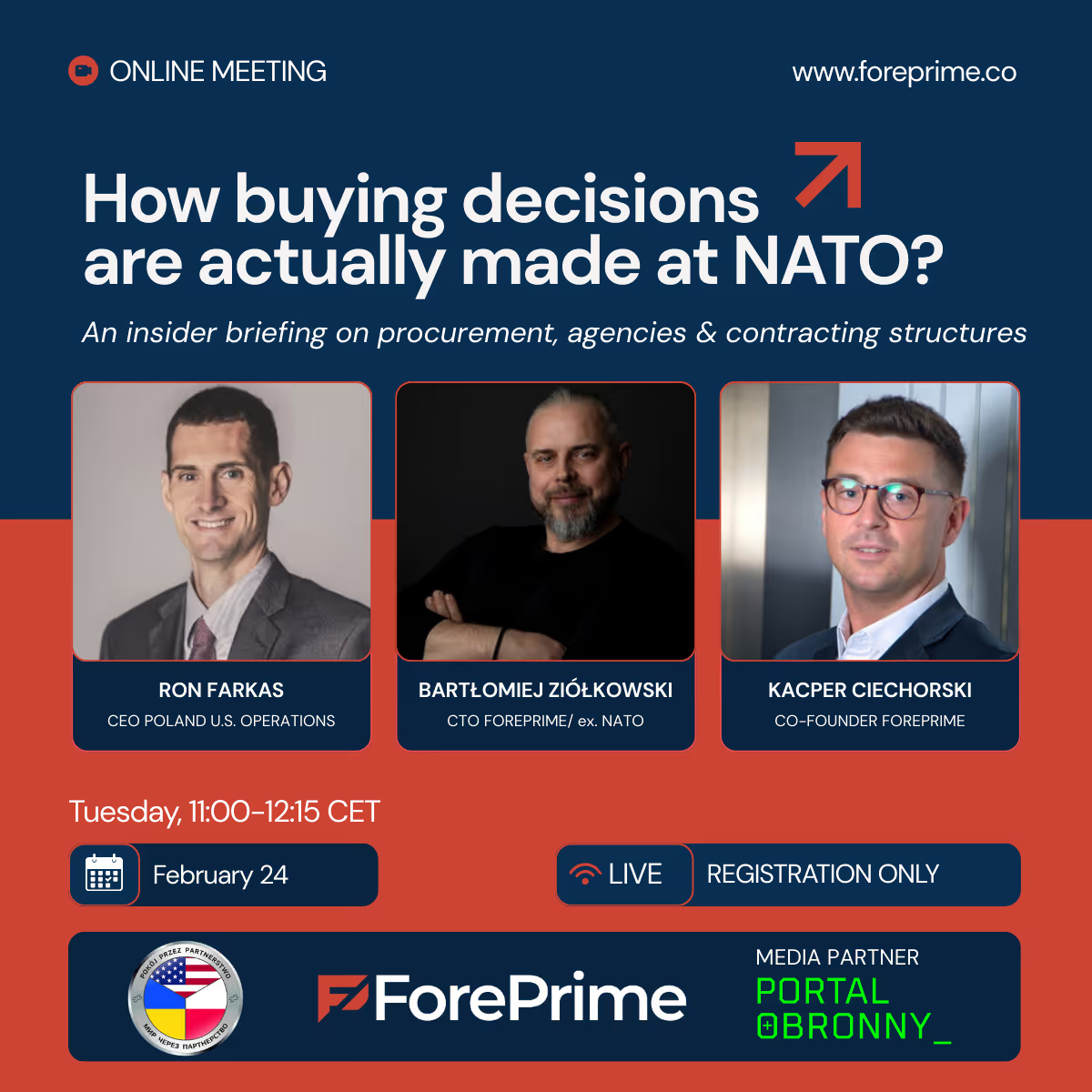
How buying decisions are actually made at NATO?
A closed, executive-level online briefing for technology companies that want to understand how institutional buying decisions inside NATO structures are actually made – beyond assumptions, sales narratives, and simplified procurement guides.
Online closed meeting · English · Registration only
About the event
Understanding how buying decisions are structured within NATO environments is often underestimated by companies entering institutional markets. This session clarified how procurement logic, agency mandates, and contracting frameworks shape positioning long before any formal submission is made.
We examined how decision authority is distributed across key NATO bodies (HQ, ACT, ACO, NCIA, NSPA), how capability vision translates into funded programmes, and where companies most often misread signals from institutional buyers.
What we covered
- Agency-level decision logic: how mandates differ across structures such as NCIA and NSPA
- The “road to NATO”: from market consultations and RFI/RFP to formal requirements (STANAG, AQAP, SDIP)
- The difference between BOA-restricted competitions and Open Competition (OC) models
- What agencies evaluate most strictly: compliance, delivery credibility, operational relevance, and price realism
- Key differences between NATO and US Army procurement logic
- What institutional buyers assess beyond the technical solutions
- Common structural misunderstandings that delay or weaken positioning
Key takeaways
- NATO is not a single buyer – mandates and funding streams differ across structures.
- Procurement strategy must adapt to the mechanism: Open Competition requires endurance and full compliance; BOA-restricted competitions require readiness and speed.
- Early positioning (market consultations, RFI responses, presence in the ecosystem) materially shapes later outcomes.
- Compliance gaps, unclear delivery governance, and misaligned pricing strategy are frequent bid-killers.
- Institutional engagement is less about technology vision and more about execution credibility.
Who this session was for
- Defence, dual-use, cybersecurity, and regulated B2B tech companies
- Founders and BD leaders exploring direct or indirect engagement with NATO-related structures
- Teams preparing for long-cycle, compliance-heavy procurement environments
Speakers
Ron Farkas
PL–US operations practitioner working across US Army and NATO-related programmes.
Bartłomiej Ziółkowski
Former long-term NATO professional with extensive experience in institutional IT and modernisation programmes.
Moderated by the ForePrime team.
No recording – what’s next?
This session was intentionally held as a live-only meeting to allow open, practitioner-level discussion.
ForePrime continues to host Closed Briefings focused on defence, procurement, and institutional cooperation across Europe.
If you would like to:
- receive invitations to future sessions
- stay informed about upcoming industry briefings
- discuss your specific institutional entry pathway
Let’s talk about your challenge.
We’ll help you find the right way